Blog

  • Stonehenge

    Letter in the Salisbury Journal

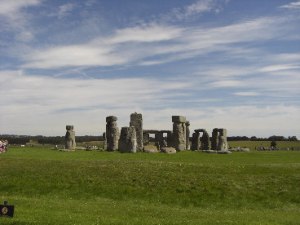
    It seems that the proposal to build some kind of bypass or tunnel around or under the Stonehenge monument has been going on since time began.  Governments come and governments go; wars come and wars go; ministers come and ministers go and still the thing does not happen.

    One factor is that whatever is proposed, there will be objections.  Almost certainly, there is no perfect solution but then, almost any solution would be better than the mess we have now next to one of the nation’s most precious monuments.

    A letter from Mark Potts in today’s Journal is of interest therefore:

    Instead of a referendum on the Stonehenge Tunnel, there ought to be a Citizens Assembly on the issue. The problem with referenda, as we saw with the Brexit referendum, is that he are subject to manipulation by the media and other influencers.

    They can only ask a simple question e.g. Do you or don’t you support …?

    They do not allow for exploration of other options.  Also the outcome of a referendum is polarising as the losing side do not feel that their voices have been heard.

    Many voters in a referendum do not have the opportunity or inclination to study the evidence in order to make an informed decision.

    For these reasons, it would be far better to have a Citizens Assembly to deliberate on the issue.  A representative  sample of citizens from the area would be chosen randomly to hear the evidence  from experts, given time to discuss and deliberate on it and be guided by the trained facilitators to come up with a set of recommendations for how to proceed.

    This allows the outcome to be informed by evidence and the participants can suggest other options.  The recommendations can go to the decision making body.

    This is a far more unfiying approach.  Citizens Assemblies are increasingly being used as a means of engaging citizens in the democratic process.  Salisbury Journal, 21 January 2021.

    Salisbury Democracy Alliance has proposed Citizens’ Assemblies as a process for these sorts of decisions to be made.  Mark Potts is chair of SDA.

  • January Democracy Café

    The January Democracy Café (2021) kicked off the new year with a debate about whether violence was ever justified.  This was very much inspired by the events of the previous Wednesday when a mob of Trump supporters had stormed the Capitol building in Washington DC and rampaged around the offices and corridors before being expelled.

    There have been many protest movements in history and the majority of them have been peaceful.  It was noted that the suffragists, who formed in 1866* (not 1881 as I said erroneously at the debate) campaigned peaceably for half a century and got nowhere.  The suffragettes were formed at the start of the twentieth century and believed in more violent action – which is now well known – and women finally did get the vote in 1928.  So is it necessary to be violent to achieve change?  That example may suggest so.

    We debated the important distinction that violence may be justified if it is not against an individual.  In relation to the Washington violence, this was whipped up by the president himself who was the law so in effect, it was violence against himself.  Chairman Mao and the cultural revolution was an example of a leader stirring up violence against the state when he was in effect, the state.

    Was there a distinction between violence by a megalomaniac and violence in pursuit of the greater good?  This prompted the immediate question, who defines the common good?  It was also noted that within these protests, there are people pursuing their own ends.  Historically, it seemed that peaceful protests may achieve little.  We were reminded in fact of the considerable violence which took place in our history as described in a book by Sir Ian Gilmore: Riot, Risings and Revolution which details the many civil disturbances which took place in the eighteenth century.

    We were also reminded of Germany in the ’30s and that Hitler was voted in because he represented what many German people wanted following the humiliations and privations after the Great War.  The protests in Hong Kong were another more recent example of people reacting to profound changes in their way of life and freedoms.  Whether they represented the majority was questioned however.

    Back to America and it was claimed that the founders of the state did not want a full democracy.  This did not just mean the lack of votes or representation for slaves and indigenous Americans, but seeking to maintain the franchise among the educated white elite.  Perhaps, it was suggested, one of the problems in America is that the ‘whites’ – so long used to a natural monopoly of power – were increasingly becoming concerned at being outnumbered by people of colour.  The year 2044 looms quite large in the American psyche as it will be when white people are projected to become the minority.  Trump has been successful in appealing to this growing sense of white victimhood.  It was noted that the vast majority of protestors at the Capitol were white and the police action was relatively mild with reports of some police taking part in ‘selfies’ with protestors.  This contrasted with the violent police actions during peaceful Black Lives Matter marches. 

    There was some discussion about the violence used by government to taint otherwise peaceful protests.  The enquiry into police infiltration is currently continuing which concerns systematic abuse by police officers over a number of years.  The Grosvenor Square march was mentioned (by someone who was there but not at the end!) and how police tactics were used to compress people into small spaces resulting in inevitable tension.  There was also some discussion about ‘kettling’.  Violence in demonstrations was often an excuse by politicians to take the high moral ground.  The demolition of the Colston statue in Bristol and its dumping into the harbour was a case in point – never mind the concerns about a statue of a slaver, look at the violent actions of the protestors instead. 

    The discussion – inevitably perhaps – moved onto social and other media and the powerful influence they have over people’s opinions.  One participant said their son only looked at social media and never read a newspaper, or looked at broadcast news, which are seen as the ‘enemy’ they said.  Facebook has ‘published’ claims recently about hospitals being empty and that Covid is some kind of hoax.   But what is ‘truth’ we pondered?  President Trump’s Facebook and Twitter pages have been taken down for instigating violence but who decides?  Is it right that one man – Mark Zuckerberg (in the case of Facebook) – possesses this power but is accountable to no one?  And what about free speech?  It was pointed out that his decision was unlikely to be for some moral position but more to do with worries about advertisers boycotting the platform.  

    The debate moved onto Charlie Hebdo, the attack in Paris which occurred six years ago.  The attack happened because of outrage by some Muslims concerning content they regarded defamatory to Mohammed.  This prompted the suggestion that we should be mindful of not causing offence.  The problem was that people are offended by so many things that free speech would become quite difficult.  There was no right not to be offended it was said.  However, we do not always have to exercise that right.  We were reminded of John Stuart Mill’s On Liberty, and not harming other people.  The distinction was made about criticising the person and criticising their views.  In this context it was noted that actions can be evil but not the person. 

    Back to social media platforms and the exposure by Carol Cadwalladr of the attempts by organisations to influence people behind the scenes in the Brexit debate and in particular, those regarded as the ‘persuadables’ [video link].  It was noted that Facebook had huge quantities of data about individuals but they (the individuals) have no access to what was held: there was a clear lack of transparency.  The information was not for us but for sale to corporations.  Was it ever going to be possible to have free and fair elections again?

    Still on social media platforms and their promotion of antivax conspiracies which are leading some people to eschew getting vaccinated or to be frightened of having one.  It was noted that the broadcast media are not making any mention of adverse reactions to the vaccine.  We seem to be stuck between conspiracy theories and stony silence.  

    A really interesting debate which once again focused on social media and the effects it is having on our politics, on what people believe and, more dangerously, how they act as we saw in Washington DC.  The days when we thought that the platforms would be a means for meaningful debate and promoting free speech seem long gone.  They have morphed into a means for promoting conspiracies, aggressive language and trolling.  

    Books mentioned:

    1. Riot, Risings and Revolution, 1992, Ian Gilmour, Pimlico
    2. Truth, a Guide for the Perplexed, 2005, Simon Blackburn, Allen Lane
    3. Philosophical Writings, Simone de Beauvoir, 2014, University of Illinois Press
    4. [not mentioned but relevant to the discussion on the use of Facebook to influence the Referendum] Democracy for Sale: Dark Money and Dirty Politics, Peter Geoghegan, 2020, Head of Zeus Ltd.

    *The Society was founded by Millicent Fawcett and her husband’s statue is in the Market Square in Salisbury.

    Peter Curbishley

    12/01/21

  • Democracy Café – December 2020

    We ended this most unusual year with a lively discussion on sovereignty but we also briefly, and rather gloomily, discussed was England doomed?  Two jolly topics leading up to the festive season. We also managed a brief diversion into animal rights.  The meeting was held via Zoom.

    Two aspects to sovereignty were suggested, firstly what is it exactly and what does it mean?  Secondly, we discussed it in relation to the current Brexit situation where, in the last few weeks, it has assumed considerable salience.  This is being written when the UK was hovering on the brink of leaving the EU and leaving without a deal looking like a real prospect.  [If it takes me more than a hour or so to write this, we might even know.]

    We were reminded that all through the tortuous negotiations of the past three or four years, it was economic prosperity which was promised with the easiest trade deal in history and a world waiting to sign us up to their trade deals.  In the last few weeks, sovereignty seems to have loomed larger in the discussions, hence the suggestion we debate it.  Could it be that the realisation that the economic case has become quite weak and so sovereignty has risen up the agenda?

    Every time we make an agreement or sign a treaty with another nation, we essentially give a piece of our sovereignty in return for some kind of advantage.  This is the essence of all the hundreds – probably thousands – of such agreements we have made over the centuries.  It is believed the first treaty the UK signed was in 1386 with Portugal which, outrageously, allowed free trade between the two nations and for free movement of people as well.  There may have been a party formed in the 14th Century called UK Independent of Portugal’ or UKIP for short but I’m not certain.

    In recent times, sovereignty has come to mean ‘bending people to our will’.  It seems to have lost its sense of mutual cooperation and become all about power – and one-sided power at that.  It was observed that there was a sense that we were seeking to leave the EU to prove the sovereignty point – a bit like shooting yourself in the foot to prove you have one.  It was also seen in terms of competition – ‘take back control’ – with winners and losers.  How could we change and move from a culture of conflict to one of cooperation?  What can we do to develop a greater sense of a caring culture?  Perhaps the education system was the place to start. 

    One of the puzzles of the current position and the prime minister’s statements of the past few days, concerns the point that once we have left the EU we will not have influence over its rules.  This is the situation Norway and Switzerland are in:  they are rule takers not rule makers.  If we diverge too much with our labour laws or standards for example, then the EU will be concerned about unfair competition and act accordingly.  It was compared to someone leaving a tennis club and then seeking to change club rules.  Yet this has seemed a difficult concept for some in government to accept.

    There was discussion about the loss of Empire and the effect of that on people’s views.  For some, this loss has been a painful wrench and being tied to the EU merely acted to reinforce that loss.  This was also linked to some of the myths of WWII (‘we stood alone’).  In this connection, and the desire to hold on to an imagined past, could we not imagine a future it was suggested?  We can never go back to that past yet we find articulating a view of the future difficult.

    There was then a discussion about wealth and the banks especially following the crash of 2018.  This was perhaps part of a feeling that sovereignty was too narrowly focused on us and the EU.  We did not have full sovereignty over the City of London yet few were concerned about this.  Chomsky has commented that $47tn has been transferred from the poorest to the wealthiest in recent years: 

    “We have just endured 40 years of regression, the neoliberal regime, a bitter assault against democracy and on the kind of society that can sustain it.  An estimate of the monetary cost to the general population was recently given by the Rand Corporation: $47 trillion transferred from the working and middle classes (90 percent of the population) to the super-rich; the top 0.1 percent doubled their share of wealth to 20 percent of the total since Ronald Reagan.

    “The Rand figures are a considerable underestimate.  Tens of trillions more were “transferred” after Reagan opened the spigots for tax havens, shell companies and other devices to rob the public.  More were developed under Clinton’s deregulatory mania.  Reagan and his partner Margaret Thatcher moved at once to undermine the labor movement, setting in motion the campaigns to deprive working people of the primary means to resist the assault.  The serious decline of functioning democracy is a virtual corollary of the radical concentration of wealth and dispatch of much of the general population to stagnation and precarity.”  Global Policy Journal, 26 November, 2020

    This and other imbalances have never been fully addressed by the Left it was noted.  Corporate Welfare was another area of wealth imbalance which receives almost no attention.

    We moved on to discuss big corporations and their increasing power.  Shoshana Zuboff’s book on Surveillance Capitalism was mentioned.  People are beginning to have second thoughts about some of the tech giants and their increasing power.  It was the power of ‘them’ – a reference to the various corporations, media firms and banks – who seem to control our lives in various ways.  The likes of Cummings and Johnson it was suggested, were about facilitating the movement of wealth upwards i.e. from the poorest to the wealthiest.

    In this connection, the concept of psychopolitics was brought up: a kind of version of Big Brother where people are conditioned by a combination of neoliberalism, corporate power and information.  How this was used in America to micro-target the black vote and successfully persuade them not to vote was given as an example.  

    Was England doomed?  The many problems – economic, a failure of democracy and the first past the post system, and cultural divisions, all led to a gloomy view.  In a sense we are now in a ‘phoney war’ as far as the EU was concerned, the full effects either way will not be fully felt until 2021.  Could this be an opportunity to reset it was suggested, a bit like after the wars which heralded important social changes in housing and the creation of the NHS?  Possibly, but during those wars, significant work was done in preparation as part of a desire for ‘never again.’  No such preparation is currently in progress since leaving the EU is believed to lead to a successful future for the country.  Indeed, the government is preparing bills to limit the power of the judiciary and to modify the Human Rights Act which some would argue are negative steps. 

    Some were more positive on the other hand noting the huge rise in community support which emerged with programmes like the NHS responders and locally, WCA.  This was reflected in more positive coverage of events in the local media. 

    This took the discussion on to the issue of subsidiarity – leaving decision making as close to the individual as possible.  We discussed likely devolution in England; the desire by the Scots to stay in the EU (if UK leaves), and the increasing independence shown by the Welsh government over the past year.  Perhaps there might be a greater role for local government it was suggested. 

    Finally, we moved onto animal rights.  It is here that we have almost complete sovereignty despite the fact that many animals are sentient creatures and are social.  Animals were not in a position to reciprocate however. 

    This only gives a flavour of the debate.   Perhaps one of the main conclusions is how partial the debate is framed particularly in relation to the EU.  It is seen as a kind of zero sum game where if you have a treaty with another country, then you have lost something and your sovereignty is diminished.  It seemed to be linked to nationalistic sentiments.  Secondly, it is extremely partial in its application seeming only to apply to Brussels.  Corporate power, and in particular the tech giants, the City and countries like USA and China all exert power over us and actually, or potentially, reduce our sovereignty, yet this is seldom discussed and almost never in terms of lost sovereignty.  

    Peter Curbishley


    Our next meeting is on 9 January and you would be welcome to join which you do by getting in touch with one of us.

  • First Democracy Cafe in India

    What might have been the first Democracy Cafe to be held in India took place on Friday 20 November via Zoom with postgraduate students at Sardar Patel University in Anand, Gujarat. Twenty four students and their teacher chose to debate the question:

          “Why are there no strict laws against rape in India?”

    The topic was chosen because of some high profile rape cases in India in recent months.  There was a feeling amongst some participants that justice was not completely done in capturing and punishing the perpetrators.  It was suggested that victims of rape are too often stigmatised and that this prevents many women from coming forward to make allegations.

    Some felt that it was not a matter of the law being too lax, but more of a cultural issue with a view prevalent in Indian society that rape of women is not a crime.  One participant felt that there was a need to raise awareness of the law amongst the general population.  Another view was that it went beyond awareness to education and that people need to be more educated to make more responsible decisions.

    The conversation drifted from education to democracy and the need for education to enhance democracy, so that people are more informed when they cast their vote for a candidate.  One student asked the question whether our vote matters.  In the UK, where our voting system is first past the post, there are a lot of wasted votes.  India has a more proportional electoral system with a list of candidates, so votes are less likely to be wasted.  There was some discussion over the option to vote for “none of the above”.

    Finally, we considered whether deliberative democracy in the form of Citizens’ Assemblies might work in Indian society.  Some students felt that they would not work because of the lack of general education and the diversity of castes and ethnic groups.  It was pointed out that the Indian system of representative democracy was devised to try to achieve a cross section of Indian society.

    We had demonstrated that Democracy Cafés can work.

  • People Friendly Salisbury

    A case for a Citizens' Assembly?

    The last few weeks have seen an outpouring of discontent concerning the People Friendly Scheme in Salisbury and it is going to be abandoned if temporarily.  Last week’s Salisbury Journal letters pages were almost entirely taken up with criticisms and negative comment about the scheme.  This week’s Journal has seen several comments in favour of it with comments such as ‘once again, Salisbury has managed to lead the way backwards into an era of continued traffic confusion and commercial decay …’

    How have we arrived at this state of affairs?  How come that the scheme is launched and has to be abandoned after such a short period?  In defence of Wiltshire Council, they were unlucky (perhaps) with their timing coming as it did in the middle of the pandemic.  It could be argued, on the other hand, that faced with the pandemic, they might have decided to postpone the experiment until steadier times. This is the substance of Mr Glen’s comments.

    However, if you look at the WC site and read the PFS pages, you can easily spot straight away a major problem: it is all about traffic.  And nothing but traffic.  If all you think about is traffic, it is hardly surprising that the other elements of the scheme get forgotten.  One of the problems with an organisation like the county council, is that they consist of large departments of which highways is one of the biggest.  It is staffed by highway engineers.  There is a danger of myopic thinking and the web site is replete with traffic orders, technical stuff about traffic management and suchlike.  I could find little to explain non technical benefits.

    PFS is more than tarmac however and is about people, the environment, amenity and businesses.  A scheme of this nature has to be sold and explained properly.  The human aspects have to be taken into account.  I suggest it was technically led added to which ‘consultation’ simply meant submitting comments after the big decisions have already been made.

    So if your timing is wrong, the project is technically based and highways led, and managed remotely from Trowbridge, it is perhaps not surprising it results in a giant raspberry.

    Could it be done better?

    Dickie Bellringer (of this parish) writing in today’s Journal (26 November 2020) says:

    If ever there was  a case for having a Citizens’ Assembly, the debacle of the PFS has surely got to be a contender…

    He goes on to recommend the use of Citizens’ Assemblies to tackle just this sort of project.  It would bring together a properly random selection of people to discuss this topic, informed by expert witnesses.  Which brings me to a further point: an examination of the web reveals study after study, research and other reports, on the implementation of similar schemes around the world.  All these studies – without fail that I could find – spoke of the benefits.  These included environmental, safer streets and better spend in the shops and restaurants etc. indeed, quite the opposite of what the letter writers wrote the previous week.

    Another key problem for Salisbury is that the City Council is a parish council with few powers and little money.  Power resides in Trowbridge and many Salisbury people will know from long experience that something mysterious happens on Salisbury Plain that seems to affect the thinking of Trowbridge folk when it comes to matters Salisbury.

    So, in summary, we have a highways led project devised with little sign of any consideration of the human aspects of what they proposed, with little sign of previous experience of such schemes being used to ‘sell’ the project, followed by a consultation exercise consisting of asking people to comment on what’s largely been decided already, launched in the middle of a pandemic and run from Trowbridge.  Apart from that, it was OK.

    Better would be to involve a random selection of citizens, informed by experts and made aware of how such projects have been implemented elsewhere, and paying due attention to the human aspects involved (as well as environmental etc.).

    Peter Curbishley

  • Democracy Café: November 2020

    This is a report of the DC which was held via Zoom on 14 November 2020

    At peak, 14 attended this meeting which is probably a record for the discussions we have had during the pandemic.  We discussed a single topic: should we adhere to the wishes of the people or should governments take decisions based on what is the best policy?  Clearly, this strikes at the heart of democracy and the belief that ultimately, it is the people who decide what should happen.

    What do you do when people vote for something which was a potential disaster?  Just because you are in the majority, it doesn’t mean you are right, the ‘tyranny of the majority‘ someone noted.

    Allowing a government to decide on what is best and not necessarily follow the will of the people [referenda and Brexit was in people’s minds] assumed that MPs knew what was best for people: how can they it was asked?  On the question of ‘that referendum’, it should only have been advisory only, not binding on the government.

    Many in the West thought that democracy – as practised here – was a superior system yet in reality it has been a sham for some time.  There has been a considerable loss of trust in the system and the people and organisations in control i.e. the government.  Several contributors said that key was the quality of information upon which people made their choices.  As we have noted on these discussions before, there were huge amounts of mis- and disinformation.  Vast amounts of money swirled around the system – some of it never declared – in an attempt to persuade people to vote a particular way.  There was also media impartiality.

    Was proportional representation together with citizen assemblies the answer?  It was pointed out that Donald Trump was elected on a system – the electoral colleges – which was a form of PR.  Whether you think that was a success or otherwise depended on your point of view of course, after all, POTUS did attract 70 million votes.  The Senate voting system was no longer fit for purpose it was noted since all states had two Senators irrespective of their size.

    The debate then moved onto the interesting area of how people came to their decisions.  The assumption that given good information then it follows that people will take sound decisions was challenged (and not just on the narrow point of what ‘good’ means in any context).  People often voted on party lines come what may.  Many of our decisions are emotionally based not based purely on reason.  People are often driven by ideology or feelings first then more rational thinking later.  This was in part the theme of the book Thinking Fast and Slow by Daniel Kahneman.  Rationality was not always the key therefore.  It was argued that perhaps there was a need for an independent commission of some kind to agree on what information was appropriate to base decisions on.  There was a desperate need for decisions based on evidence.

    Another factor was that not only do we find it hard to admit we are wrong but also, to admit that the other person was right – two aspects to the same coin.

    Back to parliamentarians and whether they represented people’s views in any event.  First past the post meant a minority of voters were needed to allow a party to form a government.  Jason Brennan’s book Against Democracy was referred to which argued that democracy was failing and was ‘rule by the ignorant and the irrational’.  The problem of ‘elective dictatorship‘ was also noted.  MPs used to be people who came into politics having done something else in life first.  Nowadays, we had more and more career politicians who have left university and ended up (!) as members of parliament having never done a ‘real’ job.  Was it any wonder we had the government we have?  They were ‘career’ politicians whose primary concern was er… their career.

    MPs have access to good information (from the HoC library and elsewhere) but how certain could we be that this is made use of for the benefit of their constituents?  If MPs were under pressure to follow the party line then what use is information however good it was?

    Final reflections concerned education and whether pupils are taught to evaluate information.  Was the impetus simply to learn and absorb not assess what is being given to them?  This lack of ability to evaluate information meant the population can be easily manipulated.

    Did we settle the question?  Probably not.  Perhaps Auberon Waugh sums it up well:

    Anyone in England who puts himself forward to be elected to a position of political power is almost certainly to be socially or emotionally insecure, or criminally motivated or mad.

    Peter Curbishley

    Books referred to:

    Kahneman, Daniel: Thinking Fast and Slow.  2011, Penguin Books

    Brennan, Jason: Against Democracy. 2016, Princeton UP.

    The question was raised about how do you know how your MP votes and the Hansard site They Work for You is extremely useful.  Type in the name or postcode and it’s all there …


  • Democracy Café

    Meeting of the Democracy Café via Zoom on 10 October 2020

    We started with the intriguing question ‘was it wrong to wish ill of the President of the USA, Donald Trump?’  Trump has recently tested positive for the Covid-19 virus and spent some time in hospital.

    It would be fair to say that everyone was in a quandary with this question since while no one would wish ill of anyone, Trump’s actions in relation to the pandemic, particularly his many statements about not wearing a mask, and also his treatment of Julian Assange led one to believe we would be a lot better off without him.

    It was an example of the ends justifying the means.  It was pointed out however that Trump represented the views of many millions of Americans – witness the packed out rallies and vast crowds wherever he went.  He stirred visceral emotions which would remain even if he was no more.  Grayson Perry’s recent programme was referred to and how he found it difficult to find people who were in the middle in America and not extreme right or left.

    In America there is a rising movement of far right people with violent intentions.  We were reminded of this following a series of R4 programmes about the Oklahoma bombings and Timothy McVeigh.  It was suggested that members of these groups might react violently if Trump loses the election next month.

    The question was posed: ‘what if Adolf Hitler had been assassinated in 1939?’  What would have the course of history looked like?  Both arguments (POTUS or Hitler) assumed that by removing one man, the problem would be solved.  What if they were replaced by someone worse?  In any event, we were left with very difficult moral arguments.  We were reminded that this very day was the World Day Against the Death Penalty.  So wishing someone dead didn’t feel right.

    The concept of virtue ethics was raised and the idea of intrinsic morality.

    The discussion moved onto the whole issue of how it was that Trump was able (or ‘allow’ someone said) to say the things he does.  He seems to destroy any notion of truth.  Some find it funny but his lies are not challenged.  There are Republicans who are uneasy it was noted.  Whatever the result of the election, the country will remain deeply divided.

    This session ended with a kind of lament about both the UK and America – why can we not have evidence based government?  Why indeed.

    The second half of the debate moved on to discuss a related topic namely the role of science in decision making.  The government has frequently claimed to be ‘following the science’ in its handling of the pandemic yet they seemed to misunderstand what science was about.  Science can only ever give a best guess about what the truth was at any given moment.  This is subject to constant refinement and revision as new evidence emerged.  Science should inform government decision making but it cannot be slavishly followed.

    It was felt that we were not told or reminded of previous epidemics.  A number had occurred and various responses tried.  Some had serious effects whereas others had not become as serious as was once believed SARS for example.  It was not always clear that lessons were being learned.  We were reminded that so-called ‘Spanish ‘flu’ (which actually started in Kansas) was of the H1N1 type the same as Covid-19.

    The point was made that the government were in a kind of ideological bind.  On the one hand they were believers in small government, the superiority of the private sector, low taxes and minimal state intervention but on the other – to deal with the pandemic – they were being forced to act like a socialist government with massive intervention and high levels of state control.  This ideological split might be making it difficult for them to decide on what to do hence the abrupt changes in policy.

    There were arguments looking at costs and benefits of different approaches of not following lockdown.  If one weighed up the costs and took into account the hidden cost to those in isolation for example, then lockdown does not seem such a good idea.

    Finally, we noted the changing attitudes to risk which in a way have become unrealistic.  Once upon a time we used to accept a level of risk as a normal part of life.  In recent decades we have become progressively risk averse and more and more laws and regulations have been passed to contain them.  It was however impossible to be perfectly risk averse.

    Altogether, an interesting debate about how government governs with some ideas about why it fails to do so, spectacularly so in both America and the UK.

    Peter Curbishley

    Relevant books:

    • The Good Ancestor, 2020, Roman Krznaric, WH Allen
    • Plagues and Peoples, 1976, William H McNeill, PBS
    • The Rules of Contagion, 2020, Adam Kucharski, Profile Books

    Update 12 October. An article discussing this topic was in Psychology Today

  • Are we drifting towards a fascist state?

    I first read this some while ago somewhere and thought it rather hyperbolic.  There used to be a joke about how many below-the-line messages there were in various online forums before someone said ‘Nazi’.  It was a kind of default accusation made by people who wanted to express a point vehemently.  But then it cropped up in conversation the other day with someone who’s views I respect and is not given to making hyperbolic remarks, and it made we wonder…

    I reminded myself of the history and development of the rise of the Nazis in Germany and some of the features of that rise and there may indeed be some truth in the charge. 

    Underpinning the Nazi belief system, which led them to the horrors of the holocaust and – the sometimes overlooked – attacks on homosexuals and gypsies, was the idea of eugenics.  This was a belief promoted by Francis Galton, cousin of Darwin which gave a pseudo-scientific gloss to the idea of racial superiority, especially the Nordic races.  How different is this to policies of immigration control being proposed by the government?  This week we have had the suggestions of Australian type islands in the Atlantic together with a modern day version of the Victorian era prison hulks to be used to store immigrants.  These policies may just be to toss some raw meat to the party conference this week to demonstrate their toughness and assuage the hard right elements.  They do build on the hostile environment policy which has been in place for many years. 

    We should not forget though that the early camps in the ‘30s were not extermination camps but places where the undesirables were sent to.  The Holocaust came later. 

    Another key feature of the Nazi rise was the astute use of propaganda.  Here we can see a direct read across.  The methods are different but the messages and use of half-truths and disinformation are the same and are widespread.  The government has been criticised and pulled up by a variety of agencies and outsiders for flagrant lying the prime exhibit being the £350m for the NHS once we leave the EU.  There are many other examples.  Mistakes get made and all governments have bent the truth since governments were invented, but the current government seems to have moved into new territory with mendacity and deception on a scale not hitherto seen.

    Helping in this activity are the social media giants in Silicon Valley, especially Facebook, who rapidly enable the promotion of false information, conspiracy theories and dubious propaganda.  The vast data operation run by Cambridge Analytica, using Facebook data, to distort Brexit is an example.   Since the great majority of our print media are owned by oligarchs based overseas – who are all right wing – there is a wall of bias and misinformation.  Standing in the way, with a remit for balance, is the BBC.   This organisation, for all its manifest faults, does try to give a balanced view which, in the case of climate change for example, for a long time gave equal credence to the denialists and the scientists.  The BBC has come under sustained attack by Ministers and the right wing press.  The proposal to appoint Lord Moore as its chairman and Paul Dacre as chair of Ofcom are part of this desire to ‘bring them to heel’.  Some of this comes from Dominic Cummings whose blogs on the subject were unearthed a while ago and were essentially about ‘getting’ the BBC and referred to it as the ‘mortal enemy’ [of the Conservative Party] and that its very existence should be subject to a ‘very intense and well-funded campaign’.  Lord Moore has today ruled himself out apparently [4 October].

    Charles Moore is also deeply opposed to the BBC and refused to pay the licence fee in protest.  [I refrain from quoting Moore’s comments on Muslims and ‘blacks’ as he calls them as they are too unpleasant.]  Another part of the attack is commercially based to try and reduce unfair competition.  Hence the constant attacks on salaries without ever mentioning that salaries in the commercial media world are usually significantly higher. 

    One of the constant complaints is that they are all left wing.  Andrew Neil? John Humphreys? Craig Oliver? Nick Robinson and Jeremy Paxman were both Conservative candidates at one time. The Dimblebys were certainly establishment if not actual conservatives.

    Leading the charge against the BBC is the ‘Institute’ of Economic Affairs, the IEA.  Who funds them is never revealed but is believed to be right wing American organisations like the Freedom Institute and the Heritage Foundation.  If the BBC was truly left wing, their reporters would ask them insistently ‘who funds you?’ They don’t. This deliberate and concerted attack on the BBC is extremely dangerous.  Of course the organisation can be criticised and it has made mistakes.  But it does stand for balance and those who accuse it of bias seldom come up with any actual examples.  Absurd claims are made about being anti-Brexit yet Nigel Farage was almost a regular on Question Time with 35 appearances.  Other UKIP and Brexit people were frequent panellists.  It offers considerable value for money bearing in mind its output and the radio stations.

    Cummings is also busy trying to neuter the Civil Service and 6 senior people have been fired or resigned.  He is busy setting up a huge centralised control centre in 70 Whitehall.  Again the attempt is to enforce a single view and to silence any opposition. 

    Back to the Nazis and another tactic was to neuter the courts and Hitler’s claim to act unilaterally.  In Britain we have seen attacks on the judiciary and an attempt to prorogue parliament, illegally as it turned out. 

    So if we look at all the activities of attacking independence in the BBC and the judiciary; the use of lies, disinformation and propaganda more or less on a daily basis; breaking of treaties such as with the Internal Market Bill and introducing a bill to curtail investigations of mistreatment by our soldiers of foreign prisoners in contradiction to a UN treaty; the proposal to ship out immigrants;  disregarding parliament and attacking civil servants – does this equate to a steady drift towards fascism?  A definition of fascism is:  a governmental system led by a dictator having complete power, forcibly suppressing opposition and criticism, regimenting all industry, commerce, etc., and emphasizing an aggressive nationalism and often racism.

    Answer?  Johnson is not a dictator and he can be removed at the next election (I suspect he will be gone long before that, et tu Brute might be his last words in office).  There is a trend towards ‘forcibly suppressing criticism’ by denigrating journalists and firing civil servants.  Regimenting all industry is not happening.  Brexit is an example of an aggressive nationalism (‘aggressive’ is questionable however) and racist attitudes are evident in the ‘hostile environment policy’ towards immigrants.  So on balance the conclusion has to be ‘not yet’. 

    Another quite mundane reason is the shear lack of efficiency.  Hitler was aided in his activities by Himmler who, although an odious individual, was extremely efficient and organised the SS into an effective force.  To take over a country as the Nazis did needs planning of a high order.  Recent history has shown the current British government to be inept on a number of fronts.  The track and trace system, the A level fiasco, the facemask chaos, and much else has shown a government which would simply be unable to manage a coup of any kind.  The words ‘putsch,’ Serco, G4S and Deloittes simply do not go together in the same sentence.  Johnson is not a fit person to run anything let alone a plot to seize control. 

    Mind set

    Perhaps the chief worry though is the mind-set.  We have a range of institutions and ways of doing things built upon several centuries of conflict, a civil war, and riots aplenty.  We do not have a constitution but we do have a famous set of checks and balances.  These all rely on politicians essentially acting in good faith and with a degree of honour.  We do have elections.  Johnson and his gang of supporters are increasingly authoritarian and ignoring the restraints on their power.  Millions are being paid out to cronies and organisations with connections to the politicians, the ‘Chummocracy’ as it’s called.  They dislike local democracy and are extremely reluctant to use local authorities in tackling Covid-19, treating them with cavalier disdain.  They are proposing to strip away local planning powers.  They have recently issued instructions to schools not to use resources from organisations who are alleged to be anti-capitalist.  So although we have the appearance of being a democracy, the ‘gang’ want to silence those opposed to it and they have a willing army of a passive media to help them do it.  Except for the BBC and to an extent Channel 4 which is where we came in.

    Are we drifting towards fascism?  I don’t think so – yet.  Paradoxically, the Conservatives have a huge majority in parliament.  They have the great majority of the print media on their side as I’ve said.  New right wing radio stations are opening – Andrew Neil being the latest to try.  Despite as they claim, the BBC being full of lefties, minister after minister is only feebly interviewed on their various programmes (if they come on at all).  Unions have all but gone and striking is now almost impossible.  The City, property developers and hedge fund types give them millions, yet for some curious reason they feel threatened by the left whom they see all over the place.   And I suspect this is where the nub of the argument lies.  

    Recent Conservative policies since Margret Thatcher’s day have been built on the neoliberal beliefs of small government, the superiority of the private sector, low taxes, sound management of the economy and competition.  The 2008 crash was a shock to this ideology (they weren’t in power at the time) but they were able to escape with the ideology intact by blaming the Labour Party for overspending.  We then had a decade of austerity which has left the NHS, local government and the public sector seriously weakened.  With no fault of their own, Covid 19 has thrown a huge ideological spanner in the works. 

    Spending is massive, and our national debt has mushroomed.  We now have large government and high capital spending on things like HS2.  Taxes will have to rise.  The economy is unsound and hardly able to withstand any serious shock.  Brexit will happen in a few months and will deliver another massive jolt.  Unemployment will rise inexorably as we go through the winter.  New trade deals will not come easily.  This is a party which is not just split – with an all but entryist group of politicians in the form of the ERG – but is pursuing policies which are an ideological anathema to them.  Not only that, but they know that they will be unable to deliver on the levelling up promises.  Devizes MP Danny Kruger’s recently published Levelling Up report is risible and will achieve next to nothing.  It is astonishing that such a feeble piece of work has been published at all but I suppose they just wanted to show they are doing something ahead of the party conference.  Nor will they be able to deliver on the care home funding crisis which Johnson said he would ‘fix once and for all’ in July 2019.  

    I suspect they may be seriously worried that at some point, the public may rumble them and the trigger may be post-Brexit problems.  Starmer’s arrival as leader of the Labour Party is also a factor causing concern especially in PMQs.  To start with, they will be able to blame (in their eyes) the intransigent EU.  The right wing media will go into overdrive complaining about it with stories about how we are being ‘punished’ by Brussels.  After a while that argument will begin to look weaker and weaker.  The heavily indebted economy will not be able to do much about undoing decades of neglect in parts of the north.  If succession movements gain momentum that will generate further problems.  They do have time on their side however.  By the spring of 2021 we may see Covid-19 under control.  Aspects of the economy should pick up.  There may be a sense of relief that we are over the worst.

    Fascism?

    The conditions that led to fascism do not exist here.  The country has not had the existential shock that WWI delivered to the Germans with widespread poverty, the effects of Versailles and reparations, the collapse of the Second Reich and the actual shock of defeat at the emotional level.  This paved the way to the appeal of the Nazis.  After all, Brexit is an example of exultant superiority, not a reaction to a serious defeat.

    We are drifting towards authoritarianism however.  It is a function of our decline as a nation and our waning influence.  A rather pathetic cadre of yes-men and women politicians are desperately chasing headlines and with little in the way of vision, are thrashing around with policy statements few of which have much chance of success.  Everything one reads about Cummings and his ideas does not inspire confidence.   Our long retreat from Empire and hostility towards European integration means many of our fellow citizens are feeling resentful and are distrustful of politicians.   It is difficult to see where it will all lead.  I suspect some kind of ‘deal’ will emerge from the EU but it will be a long way short of allowing open access to Europe for business.  We could see some major firms relocating to the continent.  We may have to learn to live with Covid-19 for some time yet although a vaccine may be available in 2021.   

    What we are witnessing I suggest is an exhibition of weakness not the first stages of a coup.  The regular announcement of half-baked and even half-mad announcements is evidence of this: simply toss out some nonsense and people think you’re doing something.  Build a bridge to link Scotland to Northern Ireland across a seabed with tons of unexploded wartime munitions – very practical. What could be more absurd than sending migrants to the Ascension Islands for processing?  They act as a distraction however.  We are not discussing the failure in care homes, we are talking about prison hulks off the coast of Essex.  We are not discussing the continuing policy vacuum in the north but the papers are full of some royal family nonsense. 

    The worry is that each step, small by itself, can add up over time to become a problem.  We are not going to see tanks trundling up Pall Mall nor paratroopers abseiling down onto the roof of No 10.  But the slow nibbling away of independence, increasing centralised control, use of private contractors who are chums of those in power, corruption and the revolving door, and attacks on the BBC all add up to a worrying trend. 

    Peter Curbishley
  • Democracy Café – September

    We held a Democracy Café via Zoom on Saturday 12 September 2020 which was quite well attended. The topic which won the vote was, unsurprisingly, the decision by the government to table an Internal Market Bill 2019 – 2021 to enable the government to override the withdrawal bill agreed with the EU under the Northern Ireland Protocol. This had caused a major outcry across party lines as it would mean the government would be able to breach an international treaty. This all took place in the week previous to the meeting.

    Members were united in feeling helpless in the face of this action. We wondered in fact, if it was put to some kind of vote, whether it would get much support in the nation as a whole. We discussed whether it was in fact a ‘wheeze’ to force the EU onto the backfoot. By doing this, it might force the EU to stop negotiations and hence enable the government to blame them for being intransigent. Evidence of this can be seen in papers like the Telegraph which was blaming the EU for the problems, not the UK government for introducing the bill.

    Could it be part of a plan to destabilise all our institutions? One by one, organisations and individuals are blamed, sacked or side-lined. Senior civil servants, ministers who did not support the prime minister, judges and the BBC have come in for attack and threats.

    The idea of seeing the government as facilitators rather than actual government was a way of looking at this. Perhaps we might debate this idea in the future more.

    Corruption

    Still on this topic, the debate moved onto the ‘revolving door’ the process by which ministers, military leaders and senior civil servants, leave government in their hundreds to go and work for various companies that lobby them or receive funding from the government. It is supposed to be controlled but effectively isn’t. This clearly leaves the door open for influence peddling on a massive scale. The full extent of this was set out in a Transparency International report in 2011* and has featured in several Private Eye articles and a full length feature.

    Another factor has been a steady trail of contracts placed without notice or tender with firms and organisations which were either incompetent or inept (track and trace) and many of which were friends, relatives or cronies of members of the government. It seems as though all rules of good governance have been jettisoned.

    There seemed no way to control this. Power lay with the executive and there was no way to scrutinise them. The only way it seemed was to take to the streets. Even here, the government has introduced restrictions and fines of £10,000 to try and stop these, purportedly as part of Covid-19 restrictions. This prompted the question, was the government using the pandemic to try and stifle protest?

    Do people care in fact? Since the majority of our media was owned by individuals who have access to some extremely creative accountancy to enable them (perfectly legally) to avoid paying tax, it was not in their interest to promote stories of corruption since the light might shine on them. Hence there was little disquiet among the public at large. Another factor was the role of social media which served to distract from the real problem. It was ‘encouraging wilful ignorance’ someone said.

    This led to a discussion about 2008 and the fact that none of the bankers involved had been called to account for their part in the crash. The Coalition government of Cameron and Osborne had been able successfully to blame the Labour government for the crisis and to introduce austerity. The rest is, as they say, history.

    City of London

    We discussed the role of the City of London and its part in siphoning huge sums of money off to various tax havens. George Monbiot had written an article about it in this week’s Guardian. It was noted that the City is not fully part of the United Kingdom and protects its independence jealously. They employ a man called the Remembrancer who is the only unelected person in the House of Commons part of whose job is to frustrate any moves to inhibit the power of the City. Attempts to remove him have always been unsuccessful.

    It was suggested that one of the reasons for Brexit was the fear the City had that the EU was seeking to contain their power and were considering the introduction of legislation. In the end, money was more powerful than democracy it was said. When John Glen MP was appointed Minister for the City about 2 years ago, it was suggested to him in a letter to the Salisbury Journal that he would do his constituents and the country an enormous service if he got rid of this anomalous post. He did not reply. The post is still there. The City is still at the centre of an enormous web of corruption.

    Philanthropy

    We discussed philanthropy briefly following a ‘long read‘ in the Guardian recently. This was linked to the topic because some firms had made vast fortunes and sought to whitewash their reputations by giving money to certain causes. Some felt that they had made the money so should be free to spend it how they wish. Much wealth was inherited however but even if a fortune was made, it relied upon employees, social support, education and society generally to achieve. No man was an island.

    Conclusion

    There was a feeling of helplessness at the activities of the government who seemed beyond control. What can one do? However, one member said s/he had written to John Glen several times and received the normal party line responses but that s/he had written about the Cummings scandal and his response was not party line. We agreed to write to him to ensure that he was aware that there are people who think the proposed legislation is outrageous.

    We will – as the Salisbury Democracy Alliance – campaign in next year’s local elections, not for election, but to promote the idea of citizen’s juries.

    Peter Curbishley


    Books mentioned:

    Treasure Islands, Tax havens and the men who stole the world, Nicholas Shaxson, 2011, Bodley Head

    Money Land, Why thieves and crooks now rule the world and how to take it back, Oliver Bullough, 2018, Profile Books

    *no longer available on line

  • Democracy for Sale

    Peter Geoghegan’ book Democracy for Sale: Dark Money and Dirty Politics* is worth reading for anyone interested in politics in the UK. It discusses in detail the state of funding of political parties today – primarily the Conservatives – and reveals an alarming picture of widespread abuse of the system and the inadequacy of the system that is supposed to keep a check on it. It shows substantial funding coming from overseas, mainly America, and the tangled methods to hide the sources from scrutiny.

    Some of the sources of money and the circuitous route it follows are almost comical. For example, during the Brexit campaign, posters with DUP appeared in the UK mainland. The DUP were exempt from revealing its sources of funding because of the threat to their (the funders) lives by terrorists. This was used by the Constitutional Research Council to funnel £435,000 into the DUP. So who are the CRC? The CRC is an unincorporated association and this means details of who they are and how they are funded are not published. It turns out that the CRC is run by someone called Richard Cook from a private house in Glasgow. Cook runs DDR Recycling. There follows several pages of the activities of this company involving law suits, alleged illegal shipments and unpaid bills. Geoghegan says the story of this man and his firm reads like an ‘airport thriller’. He never revealed however where the money came from.

    Another surprise is the role played by Liam Fox in promoting trade links with the US via the ‘Atlantic Bridge’. They have been described as a ‘byword for lobbying scandal leaving a trail of dark money and influence peddling’ and were active both in Washington and London. Fox played a key role in promoting links between libertarians, neo-conservatives and Tea Party enthusiasts. Links are described between Atlantic Bridge and the Kochs, Philip Morris tobacco, NRA and Exxon/Mobil. Fox has always been a keen believer in close links with the USA yet it seems clear the UK will be a junior party in any future relationship. Since one of the battle cries of the Brexit campaign was ‘take back control’ it seems odd that we do that and then cede much of it across the Atlantic.

    The so-called ‘Institute’ of Economic Affairs features on many pages as an influential lobbying organisation. It has been influential in setting policy agendas often based on flimsy research, has links to 31 MPs and has argued for the privatisation of the NHS. Crucially, its funding is secret although suspicions surround the influence of American money. Its opinions are sometimes sought by mainstream media and they appear from time to time on the Today programme on the BBC but are seldom asked ‘who funds you?’

    The ERG features as you would expect which became a party within a party and was behind the defenestration of Theresa May as PM and Boris Johnson becoming her replacement. Their funding is also opaque. Indeed, throughout the book, various shady organisations and lobby groups appear and yet who funds them is either opaque or secret.

    There is nothing inherently wrong with lobbying. No doubt people and organisations have the right to speak to elected representatives and ministers. The problem is now the scale of it and its secrecy. American funded organisations, with strong anti-government and neo-liberal agendas and with a desire to deregulate, are pouring millions into a variety of think tanks and lobby organisations with a view to influencing policy. They have been hugely successful and Brexit itself may well be their crowning glory. If we are to have lobbyists, their funding should be known – particularly overseas funding – and meetings should be minuted.

    In our Democracy Café sessions, the issue of democracy has frequently appeared as you might expect. We have debated this and that form and which of them might give better results. Readers of this book might conclude that what form it takes is largely irrelevant. What matters is the influence wielded behind the scenes, the ability to set agendas especially as so much of our media is compliant, and the ability to ‘frame’ debates or in other words, the ‘dead cat’ argument. The wealthy can pay £50,000 to dine with the prime minister. The housing minister sat next to a developer and rushed back to overrule the inspectors in what was alleged to be an example of ‘cash for favours’.

    A big part of the book is taken up with the row concerning digital media, Cambridge Analytica and AggregateIQ. This involved the use of illegally acquired personal data from tens of millions of Facebook clients to facilitate political campaigning.

    Overall, the scale of the lobbying, the money involved and the fact it is way outside the traditions of the way politics is supposed to be carried in this country is both depressing and shocking. Few however seem concerned. The occasional fine is too small to be regarded as little more than the cost of doing business. Politicians are unlikely to give adequate powers to the Electoral Commission to enable it to properly police the system.

    It is ironic that just down the road from where I am typing this was the rottenest rotten borough of Old Sarum. No one lived there but it had two MPs. Landowners were able to appoint whom they wanted prior to reform in 1832. We joke about it now but in a way we have a truly rotten system today that serves no one except possibly some American and UK corporations. All the time we have a defective, corrupt and secretive system, we will get the politics and politicians we deserve.

    A recommended read.

    Peter Curbishley


    Democracy For Sale. Dark Money and Dirty Politics. Peter Geoghegan, Apollo Books, 2020