Tag: Citizens’ Assembly

  • Democracy Café

    There will be our usual DC this morning, Saturday 13th August starting at 10:00 am as usual at 29 Brown Street Salisbury and finishing at noon. Well there wasn’t. A small handful of people turned up and after a quarter of an hour, we called it a day. Hot weather, several people away or on holiday, meant it did not happen.

    We shall be back in September when hopefully, the weather is kinder so we hope to see you then.

    PC

  • Salisbury City Plan

    Welcome if you have come here from seeing a letter concerning the Salisbury City Council Neighbourhood Development Plan (SCCNDP) in the Salisbury Journal (Let citizens have the say (sic) 4 August 2022). The letter expressed disappointment that the Council has decided not to use a Citizens’ Assembly to help prepare such plan. We have tried on several occasions to interest them in this process but so far without success. So what is it all about? It’s how do you go about devising a plan such as the SCCNDP and come up with something which is meaningful, grounded in some evidence, achievable and faces up to the situation Salisbury finds itself in. We believe that the best way to deal with complex issues such as this in the public realm is by using a Citizens’ Assembly.

    A lot of work has gone into the plan and there are elements discussing shopfront designs, a strategic environment assessment, a Churchfields master plan (you can’t say they aren’t brave), housing analysis, and a community survey report among others. SCC has to be commended for this work that has gone into this. There are lots of charts, and coloured diagrams. But having ploughed through report after report, chart after chart and photo after photo several omissions are evident:

    • There is no kind of analysis of where Salisbury sits in terms of other competing commercial centres. Are we doing better than them or worse? Our level of voids is slightly above the national average which, for a prosperous southern city, should surely be a bit of a worry. The City does not exist in isolation and people are free to travel for their shopping or entertainment to other centres. What does the City have to do to attract visitors? Things like the range and quality of restaurants is not mentioned for example.
    • A huge amount of effort has gone into environmental and design issues which one could hardly argue with. But what are they designed to do? What is the purpose of the proposals? A researcher with the Institute of Government says “quick wins on making town centres look nicer are not a long-term fix”. Having nice shopfronts is desirable of course but is it sufficient to enable Salisbury to compete with other centres? I could not find any such argument to support the plan.
    • They have also spent money – quite a lot of it by the length of the report – on a Community Survey Report by Community First in Devizes. Astonishingly, the report almost fails from page 8 where it notes that over half the respondents were over 60! It then claims that it is ‘broadly evenly split in terms of gender’ before telling us that 57% were female and 42% were male. A new meaning to ‘evenly split’ I feel. The highest proportion was in the ’69-69′ age group apparently (sic). You cannot claim such an unbalanced set of people can give you anything much meaningful in terms of policy especially in terms of the needs of young people. No conclusions are drawn, there is no executive summary and there are no recommendations.
    • A lot of time has been spent in asking people what they want and needless to say you get responses which are extremely aspirational. Of course people want to protect the environment, who doesn’t? But will they give up their 4x4s to achieve any of this wish list?
    • More money has been spent with an American consulting firm AECOM who have spent a lot of time analysing a range of sites in Salisbury from the point of view of how they might be developed sustainably. Again, all very fine but isn’t it putting the cart before the horse?
    • I could find no mention of Brexit. Whether you are a Remainer or a Brexiter, the effects of leaving the EU cannot be denied either way. Yet there is no analysis of its negative effects or any opportunities there might be.

    All in all, a great deal of time and quite a lot of money has been spent on producing suggested plan after suggested plan without much in the way of cogent analysis of what the City needs to survive. Take the Profile report. Largely descriptive with some history thrown in, it is a kind of ramble around the city educational establishments and infrastructure with the odd random suggestion thrown in such as we need ‘to find means of encouraging innovation’ and we need a ‘well-connected and reliable transport system’ and other such bromides. Since the lack of any such integration has been around for decades, what chance is there achieving anything now or in the immediate future? What powers does the City Council have to achieve any such integration, desirable though it no doubt is? It ends with a collection of foreign town centre photos.

    Having identified ‘finding means of encouraging innovation’ as a goal, one such area is science and technology and links to universities. A page or two later there is this paragraph: ‘Salisbury does not possess a university and given its population size and its proximity to four universities within 25 miles it is unlikely to however the science based industries located in or around the city may make it attractive to universities wishing to locate departments or faculties’. Perhaps it is intended at a later date to encourage a university to locate such a facility here.

    Demographic effects

    The Housing Needs Assessment identifies the imbalance in Salisbury’s housing stock and the need for more social/affordable housing and calculates that there is a need for 1,512 such units over the plan period. It discusses the difficulty of achieving this with developers unwilling to provide them and planning inspectors unlikely to support more forceful planning policies. Powerful developers can bring in expensive surveyors and get affordable housing provision removed or reduced which LPAs are largely powerless to defend. But the key element of the report, and something which will have a profound effect on the plan policy as a whole, is the analysis of the city’s aging population. In short it refers to a ‘dramatic shift in demographics expected in the future: an 85.6% increase in those aged 65 and above‘ and that ‘the elderly population will be 14 times the size of Salisbury’s younger population by 2036‘. The recommendations in the report are bland and of limited utility.

    This is dramatic stuff. Such an imbalance will have significant consequences for the economy. Tarting up shopfronts and planting more trees will not matter if the population becomes more and more elderly. Trying to attract a university faculty to set up will be made much more difficult if there aren’t the young people and limited places for them to live. It will affect spending patterns, the ‘night time economy’ and more and more care homes will be needed. There will be economic impacts with reduced spending, increasing pressure on infrastructure, and what experts term ‘increased dependency’. It is probably true to say this fact alone will be the dominant consideration in the next few years. Yet this potentially explosive fact is hidden somewhat in one of the reports.

    Citizens’ Assembly

    Would an assembly have produced a better result? We would say ‘yes’ of course so we need to say why. Firstly, as we have noted above, if you produce a community report based on an unbalanced and mainly elderly pool of people, you’re going to get an unbalanced result. A CA would properly select a group of people demographically and socially balanced. There is an organisation which would do this for us.

    Secondly, the discussions would be informed by experts. Such experts might suggest for example, what are the important factors in developing a city economically beyond something of an obsession with the environment. Consideration might have been given to looking at Salisbury’s relationships with competing centres of retail and leisure in the vicinity – what are we good at, what needs to improve. Participants would have an opportunity to debate and discuss in detail the elements of a plan not asked to read a collection of unconnected documents. Finally, one would also hope that the process would lead towards the elements of a strategy: where to start and where spend needs to be focused to achieve a realistic outcome. This must be better than expecting people to plough through pages of unconnected reports.

    Policy options from promised legislation also seemed to have been overlooked. The current issue of The Planner* (pp 24 – 27) suggests various policy changes which could be of use in this exercise. For example the Levelling Up and Regeneration Bill (LURB) may introduce rental auctions to enable local authorities to lease a shop which has been empty for at least 366 days. Since Salisbury has slightly above the national average of empty shops, this would be of great value. Easier Compulsory Purchase Orders may also be introduced. These and other proposals may become law in the plan period and are worth considering now.

    Of course, we wish SCC well with this exercise while lamenting a missed opportunity for a more in-depth approach. Most of the responses they have received so far are either ‘satisfied’ or ‘happy’ however, although few who have responded to the detailed reports. The results will go to WC as the LPA thence to an inspector and finally, maybe, a referendum.

    *Street and Level, Journal of the Royal Town Planning Institute, August 2022

    Peter Curbishley

  • Maltings site

    Maltings site sold for redevelopment – but what now?

    Salisbury Democracy Alliance has argued for some time now that with big decisions facing the city, employing the Citizens’ Assembly technique should be considered. We have tried to get the concept incorporated into party manifestos – with some success – but with the proposal to go ahead with the redevelopment of the Maltings, it is looking as though the opportunity to employ the technique with this project is slipping by. That would be a pity.

    The idea of a CA is to convene a carefully and demographically selected group of local people to come together over three weekends and, advised by a range of experts, to consider a problem in depth. What to do with the Maltings and the relocation of the Library would be an ideal project. The advantages would include proper involvement of local people in the project, an absence of any political posturing and ideas and recommendations put forward which have been properly considered.

    It contrasts with what is likely to happen at the Maltings. The sale to Catella APAM already begins to limit the likely options for redevelopment. A quick look on their webpage shows that they are a property company who do a lot of the early development to enable a scheme to be sold on to investors. Nothing wrong in that but their focus will be on viability and making a return. That’s their business. Since Salisbury is not ‘prime’ in property terms it is likely to mean that the returns will be have to be a little higher to sell the project to investors.

    What is striking in the Salisbury Journal article (Council leader’s vision for future as Maltings site is sold, March 3, 2022) is actually the absence of any vision. The quote: ‘Despite “nothing specific” tabled for the area right now, Cllr Clewer added, “I’m sure Catella has its own ideas for the site, we need to understand what it wants to do taking this forward and we look forward to working with them” more or less sums it up (my italics). It will be Catella deciding on what it wants for the site. If the quote is accurate, it represents a depressing state of affairs where, without any clear vision for the site or proper consideration of Salisbury’s wider shopping and recreation needs – and certainly no consultation or input from the citizenry – the site is sold for a property company to basically do what it wants with it.

    So what is likely to happen? Catella will do their analysis of the site and look at rentals and how it can be redeveloped to provide a return likely to be attractive to a future investor. A proposal with a strong commercial emphasis will be put forward and there is likely to be a consultation of some kind at that stage. There will then be several weeks of sturm and drang with letters in the Journal complaining about this and that (‘missed opportunity’ is guaranteed to be said) and Catella may agree to some minor changes. Then to planning and basically it will all be over. Thus an opportunity to think carefully about how the site might be developed to enhance the wider prosperity of the city will have been lost.

    Many years ago, C Northcote Parkinson wrote The Pursuit of Progress, famous for its law about work filling the time available. But he also, if I recall correctly, talked about how council committees would wave through major projects they did not understand but would argue passionately about the bicycle sheds which they did. I don’t wish to be unkind, but I am reminded of this here. This would have been a golden opportunity to set up a Citizens’ Assembly and to develop a vision for the site, a vision where we the citizens would have an input into what could happen. Of course, commercial realities may temper the vision, but simply to sell a key site without any vision and wait for a developer to give you one is, in my view, a very poor show.

    Peter Curbishley

    [These views are not necessarily those of other members of SDA]

  • People in the Park

    We had a busy day on Saturday 18 September at the People in the Park event in Salisbury. We were blessed by the weather and a steady flow of people through the day. Our SDA stall was well attended and we ran out of Democracy Café leaflets.

    There was interest in the Citizens’ Jury concept which has received a degree of local publicity in last few weeks. It was briefly debated in the City Council last week. There were many questions: what is it? isn’t it expensive? and don’t we have councillors whom we elect to decide these things anyway (and can ultimately vote out if we don’t like them)? Well yes and no.

    The basic concept is a randomly selected group of people who come together over 3 weekends to discuss a topic of political interest. They are advised by experts in the topic. The randomness is important as the problem is often that ‘consultation’ just means a narrow group of people talking to each other. Many feel excluded and public meetings are often populated by only a small part of the population as a whole. The young are only rarely seen or heard from.

    It is quite expensive. Participants have to be paid, selection costs money as do the experts. Then there is room rental etc. But just think of the huge sums spent by Wiltshire Council on half-baked schemes which get nowhere and on their consultation exercises. Wouldn’t it be better to get a more broadly based set of views rather than from council officers in Trowbridge? Consultation in their terms actually means telling us about their plans. How much credence is given to different ideas or suggestions which are contrary to the political beliefs of those in Trowbridge?

    ‘We elect councillors’ is a frequent refrain so why invent a new (and expensive) system? So how many people engage in lengthy and complex discussions with their councillor on these topics? Very, very few I wager. Councillors over the years tell me that their contact with electors are about holes in the road, hedges not being cut, planning application moans and about fly tipping. All important in their way but hardly strategic topics which affect our futures.

    Finally, the process is considerably more ‘bottom up’ rather than ‘top down’. It can be argued that it is genuinely more informed by randomly selected people who have had having had the benefit of expert advice and which is much more likely to recommend practical and doable projects.

    That is why we believe that citizens’ juries are a superior form of policy making than the current system. One person spoke to me who was dead against the idea mostly for the reasons above. He had been a councillor. As we discussed the idea the conversation slowly morphed into how he found being a councillor unsatisfactory and inefficient and he ultimately stood down. On the one hand he was wedded to the current system but, as time went by, he found it more and more unsatisfactory and left. I suppose the moral is that people are so inured to the system that despite its manifest failings, they find radical change of this nature hard to accept.

    At both the national and local level, the way we do politics is failing us. Surely it is time for radical change?

    Peter Curbishley

    Picture: SDA

  • Consultation on Climate policy

    In response to a proposal by Wiltshire Council to consult on their climate policy, the following letter was published in the Salisbury Journal on 9 September 2021.

    [The Journal] reported that Wiltshire Council has launched a consultation on its Climate Strategy (Consultation on council’s Climate Strategy now live, 2nd September). Although engagement with the public is always to be welcomed, we question however whether this is the best way to get a proper and balanced view on this important subject.

    Salisbury Democracy Alliance has argued that a much better approach would be achieved by using a citizens’ assembly. This method selects a truly representative group of people who then meet over a period of three weekends and, advised by experts, discuss the topic in some considerable depth.

    This method has been applied very successfully in several parts of the UK and among its most notable successes have been in Northern Ireland.

    The problem with the consultation proposed by Wiltshire Council is that it will attract the ‘usual suspects’ and those with vested interests to protect or promote. It also limits views to those put before them by the council and hence might inhibit new thinking.

    Climate – as we have seen around the world in recent months – is a hugely important subject and merits a properly organised citizens’ assembly which will provide a genuine and informed contribution to policy formulation. Importantly, it will demonstrate proper involvement by citizens and counter any belief that this is another set of policies which the council is imposing on them.

    Peter Curbishley

  • Trusting the people

    On several occasions on this site we have talked about Citizens’ Assemblies or Citizens’ Juries where a carefully and randomly selected group of people come together to discuss a topic of local interest. They have been used more and more around the world to try and find solutions to those tricky decisions that can so divide communities. People have great faith in democracy the assumption being that electing people who believe in certain things will result in good government, local or national. A quick look around us should have put paid to that belief.

    Shortly, we shall be having local elections. We have been trying to persuade the various local parties to include CAs in their manifestos with some success. A letter by Dickie Bellringer in today’s Salisbury Journal (29 April 2021) discusses progress so far:

    “There is one political party holding out against People Power in the upcoming local elections – the Conservatives. Before last week’s online candidates’ hustings , organised by the Salisbury Transition City, two Parties – Labour and the LibDems – had already committed to the idea of Citizens’ Assemblies in their manifestos.

    “LibDem candidate Victoria Charleston confirmed that commitment during the debate. The idea is in the Green Party’s national manifesto and the Green candidate Rick Page nailed his Party’s flag to the local Citizens’ Assembly mast.

    “Independent candidate Annie Riddle said we would needed to develop more grass roots democracy including CAs. We don’t know yet what the other Independents think. And Labour’s Clare Moody and Green’s Sarah Prinsloo made the important point, in answer to a question about how to educate people sufficiently to take part in CAs, that participants received information from expert witnesses so that they can make informed decisions.

    “At Salisbury Democracy Alliance we have kept the flame flickering for Citizens’ Assemblies over the past four years despite a cold wind of indifference from the Conservatives – apart from a glimmer of hope when the former City Council leader Jeremy Nettle warmed to the idea.

    “There was, however, silence from the Conservatives on the issue at the hustings and there is nothing in their manifesto. So, if the Conservatives don’t change their minds and if you don’t want to live under what Conservative peer Lord Hailsham called ‘elective dictatorship‘ don’t vote Conservative!”

    Dickie Bellringer is a member of SDA

    Peter Curbishley

  • People power

    This is the title of a letter from our chair published in the Salisbury Journal on Thursday 15 April 2021 on the subject of Citizens’ Assemblies.

    It is time to restore the faith of the citizens of Salisbury in the political process.  To that end, it is heartening to see so many candidates for the City and County elections to be held on May 6th embracing the idea of giving a voice to a wide cross section of the citizens of Salisbury.  Labour, the Liberal Democrats, the Greens and Independent candidates have all pledged their support for the idea of Citizens’ Assemblies or Citizens’ Juries to consider deeply issues like how to meet the climate emergency or how to revitalise our city centre.  The Conservatives are the notable exception.  Have they not learned that they need to restore the faith of the citizens of Salisbury after their shabby treatment of us in recent years?

    Members of Citizens’ Assemblies/Juries  are chosen by a process called ‘sortition‘, where letters are sent out inviting citizens to participate and those who respond positively are then chosen at random to be representative of the make up or our community in terms of income level, ethnicity, gender and age.  The citizens who are chosen to attend are paid to attend much like a jury in a trial.  This process ensures that people who would not normally be engaged in such issues are give n the means to participate.  

    The participants study the evidence from all sides and make recommendations for our community which are not based on political dogma, sectional interests or personal favour.  Councillors – for all their commitment and hard work – rarely have the opportunity to focus so closely on one issue, hear from the experts scrutinise the evidence and work collaboratively with others to make fully informed recommendations.  This deliberative process is being used in communities throughout the world.   A recent OECD report covered 300 examples world wide.

    Why will the Conservatives at both city and county level not back a process which gives power to members of our community in Salisbury?  We have seen the consequences of poor decision making by the councils for our city.  It is time to restore power to our community. 

    Dr Mark Potts

    Chair of Salisbury Democracy Alliance

  • Annual meeting

    The officers held an annual meeting today (31 March 2021) to review progress and plan the future. Overall, the chair said, we have made good progress and the idea of both Democracy Cafés and Citizens’ Assemblies were both gaining ground. Dickie had set up a second Democracy Café in Bemerton Heath and this was slowly gathering members. There were now some 300 assemblies which have taken place around the world. Unfortunately, the CA idea had not been enthusiastically received either by John Glen MP nor the leader of Wiltshire Council Cllr Philip Whitehead. They both felt that they already represent everyone so it is not necessary.

    Account

    The bank account was in funds with little activity at present. As TSB had closed in Salisbury there was the question of where to bank in future.

    Officers

    The Committee was Mark Potts, Dickie Bellringer, Mike Hodgson, Jill Cheatle, Lesley Curbishley and Peter Curbishley. Officers were elected as follows:

    • Mark Potts, Chair,
    • Andrew Hemmings, Treasurer
    • Peter Curbishley, Secretary and website
    • Dickie Bellringer, Membership secretary

    Elections

    Elections are to be held in May and there have been attempts to interest the various parties to adopt policies to encourage Citizens’ Assemblies. Good progress has been made:

    • Labour’s manifesto for Wiltshire has included the policy of ‘trialling the use of a Citizen’s Assembly’.
    • The Labour group on the city council has, in its Statement of Intent, included ‘… supports the use of Citizens’ Assemblies’
    • The LibDems have a policy of encouraging and supporting CAs and has an immediate priority of ‘initiating planning for Citizens’ Assemblies’. Further details can be found from this link.

    Updates

    • A Zoom meeting was held on PR hosted by the LibDems and the local representative of Make Votes Matter will make contact with DB.
    • OECD had published a report Catching the Deliberative Wave which discusses the 300 different models and experiences around the world
    • The People in the Park event has been postponed until September 18th. We have been invited to attend and to speak. We will plan a leaflet or factsheet nearer the time.
    • The Hampshire Equality Trust are considering a Democracy Café which will not be exactly like normal one but will focus on equality issues.
    • A Democracy Café was held with RSA which split into two groups. There will be another meeting in Devon on 11 May.
    • On 18 May there is to be a Zoom meeting with the polymath, Prof Raymond Tallis. A link will be provided in due course. Early registration is advised.
    • The talks to schools are on hold as they will be concentrating on restarting the education programme and catching up on lost time.
    • Dickie spoke of the reading group he runs under the aegis of the Library.
    • The Talkshop event, cancelled at the outbreak of the pandemic, is still on hold. It was agreed that we would not consider restarting the project until we had resumed a face-to-face Democracy Café at the Playhouse. When they re-open we did not know at present.

    Readers would be welcome to join our next Democracy Café which takes place on Saturday 10 April at 10:00 am. Leave a message here to let us know and we will send you the link.

  • Lib Dem organised meeting

    If you attended the meeting yesterday evening (27 Jan) with 30 others organised by the Lib Dems, you may have seen reference to the SDA. The speaker spoke of citizens’ assemblies mentioning the Northern Ireland example in particular.

    We are keen to support this idea so anybody keen to support it is welcome to keep in touch. We want to establish the principle in Wiltshire. The meeting expressed considerable dissatisfaction with politics both local and national and the speaker, Dr Ian Kearns was encouraging us to get active. He mentioned the Frome Flat Pack project which has been written up here.

    A report by Dr Kearns can be read by following this link.


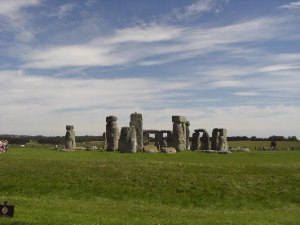
  • Stonehenge

    Letter in the Salisbury Journal

    It seems that the proposal to build some kind of bypass or tunnel around or under the Stonehenge monument has been going on since time began.  Governments come and governments go; wars come and wars go; ministers come and ministers go and still the thing does not happen.

    One factor is that whatever is proposed, there will be objections.  Almost certainly, there is no perfect solution but then, almost any solution would be better than the mess we have now next to one of the nation’s most precious monuments.

    A letter from Mark Potts in today’s Journal is of interest therefore:

    Instead of a referendum on the Stonehenge Tunnel, there ought to be a Citizens Assembly on the issue. The problem with referenda, as we saw with the Brexit referendum, is that he are subject to manipulation by the media and other influencers.

    They can only ask a simple question e.g. Do you or don’t you support …?

    They do not allow for exploration of other options.  Also the outcome of a referendum is polarising as the losing side do not feel that their voices have been heard.

    Many voters in a referendum do not have the opportunity or inclination to study the evidence in order to make an informed decision.

    For these reasons, it would be far better to have a Citizens Assembly to deliberate on the issue.  A representative  sample of citizens from the area would be chosen randomly to hear the evidence  from experts, given time to discuss and deliberate on it and be guided by the trained facilitators to come up with a set of recommendations for how to proceed.

    This allows the outcome to be informed by evidence and the participants can suggest other options.  The recommendations can go to the decision making body.

    This is a far more unfiying approach.  Citizens Assemblies are increasingly being used as a means of engaging citizens in the democratic process.  Salisbury Journal, 21 January 2021.

    Salisbury Democracy Alliance has proposed Citizens’ Assemblies as a process for these sorts of decisions to be made.  Mark Potts is chair of SDA.