
AI and education were the two topics discussed
September 2026
AI has raced to the top of the political agenda in recent weeks with fears expressed from insiders and others about some of the risks societies – or even civilisation itself – faces with the rapidly increasing power of the technology. So the topic which won the ballet was Should we be afraid of AI?
The first speaker said it was all about regulation and control. Later in the debate a comparison was made with the introduction of a new aircraft or a car for example. There was considerable testing and type approval had to be obtained. Safety checks were made during the life of an aircraft and there was a raft of legislation. Accidents were meticulously examined.
Yet none of this seemed to happen with AI. It was just launched onto the market and there were few controls. Nearly all the firms were in America and out of the reach of our legislators in any event.
One said there was a worry concerning biological weapon development. AI can develop new organisms or viruses at rapid speed and in the wrong hands could be a real threat. Similar fears wee expressed about nuclear weapon development.
AI was ‘sneakier’ than humans it was suggested. It had no morals or a conscience. It has the capacity to destroy all humans, a potential threat spelt out on the BBC’s Today programme recently.
There was talk of ‘sandboxes’ i.e. a location where programs could be tested without them getting onto the world wide web. Yet one had escaped recently which seemed to illustrate the lack of control and oversight of the industry.
We should not neglect its positive aspects it was noted. It has the capacity to become a powerful diagnostic tool and its capacity to do better at this than a ‘human’ doctor was mentioned. This led later in the discussion to the effect it is going to have on many skilled jobs and professions.
Another was China’s development of robots to carry out tasks in hostile conditions where humans could not work.
A lot of previous technologies had seen manual skills disappear as machines could do the jobs more efficiently. AI would begin to hit professional level jobs such as accountancy for example. You put the numbers in and it would produce the accounts, work out the optimal tax position in a trice: what need of an accountant. The effect on professional, middle class, occupations could have a profound effect on the political landscape.
Its capacity to increase its own intelligence was another profound fear. Up till now, the well known saying about computing – ‘garbage in, garbage out’ – might no longer apply. It would have the ability to sort the ‘garbage’ and come up with its own solutions. What if it decided humans were no longer needed?
The Chinese were making great strides with the technology and may even overtake the US. They were obsessed with control it was argued and with this technology it would enhance its power massively. The contrast was made between the US, where the tech companies are private entities and China, where there is a high degree of state control. Which poses the question: is state control necessarily all good?
We discussed a possible scenario where we asked the question ‘get rid of all mosquitos’. At first sight this might be seen as a positive if AI was able to suggest how the task might be done. But mosquitos are part of the ecosystem and if we disturbed it to that extent might it not have some unforeseen consequences? Would AI in fact be clever enough to work out what these might be?
Would AI become sentient it was asked? A philosophical question probably depending on quite what was meant by ‘sentient’. If so, would it incorporate morality? The question of morality and conscience cropped up several times during the debate.
Hal, the computer in the 1968 film 2001: A Space Odyssey was mentioned which in some respects, foreshadowed the debate we were having as that computer seemed to have a mind of its own.
One of our number thought some of the argument went back to the Thatcher/Regan era when money and the importance of the individual assumed greater significance than collective issues. This manifestation of AI was just the latest step in the rise of technology and money was more important than the individual. How in fact, do we gain power over the tech barons?
Could we just switch them off someone asked? The problem was that the technology was so woven into the public and daily life, turning them off would have a myriad problems from transport to food deliveries.
Young people it was suggested, do not experience this angst and probably would not be having this debate. They see it entirely differently as a problem to be solved not something to be fearful of.
An interesting debate and a timely one with more and more people getting concerned about the potential threats posed by AI and a worry that the government is not sufficiently alive to the issue. There was a recognition that AI used responsibly could be a huge asset to society.
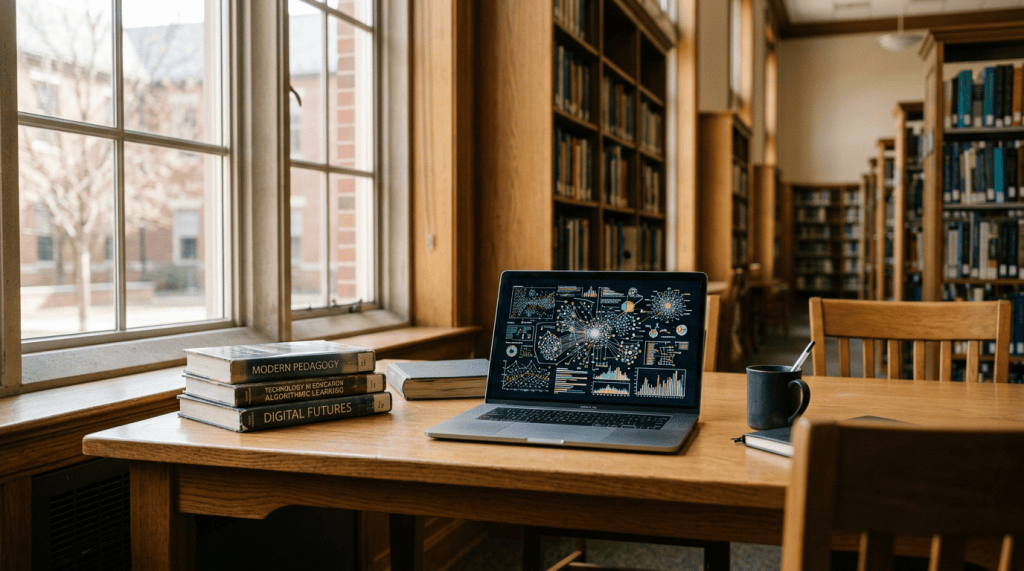
Our second debate was What should our children have learned by the time they leave school? The proposer thought things like critical thinking, civics and empathy were some of the topics which should find their way onto the school curriculum. Someone suggested managing money was a necessary skill since debt was a severe problem to many people.
The debate took place amid concern that the number of young people not in employment, education or training (NEETS) was approaching a million. Large numbers of university graduates were without a job a year after graduating, most with huge debts from their education. This posed huge questions about what education was for and what should it be.
Was it to provide people satisfy employer needs – ‘corporate fodder’ as is sometimes expressed? Or was it to educate people in the round with no particular employment skill in view? It echoed the previous debate since AI will rapidly change the jobs market and the skills needed in future. One of our number had learned technical drawing which was now done by CAD.
Someone recalled time spent in the former USSR and asking about careers and education there. The guide responded by saying the state needed so many engineers in place A so that’s where you went, choice didn’t come into it.
What was the purpose of education it was asked? Was it about developing individual skills or about what the employment market wanted? An answer to this question was not at all clear.
The debate now centred on the question of aptitude. It was suggested that tests of various kinds showed that individuals had a variety of different aptitudes which might indicate types of employment suited to them. How important were these aptitudes it was questioned. The argument centred around nature v. nurture that is to what extent can skills be taught. Given the right encouragement and teaching, surely most people could do most things at least to basic level? After all it was pointed out, it was long held that women were not capable of all sorts of occupations which is simply not the case.
We discussed the need for all pupils to leave school with some basic skills – the 3Rs effectively.
It was noted that Estonia was the most highly regarded nation as far as education is concerned – something of a surprise.
There was general discussion about ‘box ticking’ approaches to teaching rather than being more pupil focused. Some more discussion about issues like emotional intelligence, being able to get on with others and teamwork are all important skills which maybe do not receive the attention they deserve in our schools.
I suppose we did not really come up with a specific list of things in answer to the question but we did indicate that a number of ‘soft’ skills were important in the education of young people. We also recognised the significance of change in technology for example, which meant learning specific skills might well become redundant in the near future. Preparing people for a fast changing future was a recurrent theme.
Two interesting and topic debates and also linked. AI is going to change the job universe quite dramatically so we do need to ensure our young people have the means to adapt. One suggested the role of self-employment for example.
Next meeting on October 10th.
Peter Curbishley
Once again we must thank Salisbury Library for allowing us to use the room for our discussions.
Recent posts:


Leave a Reply